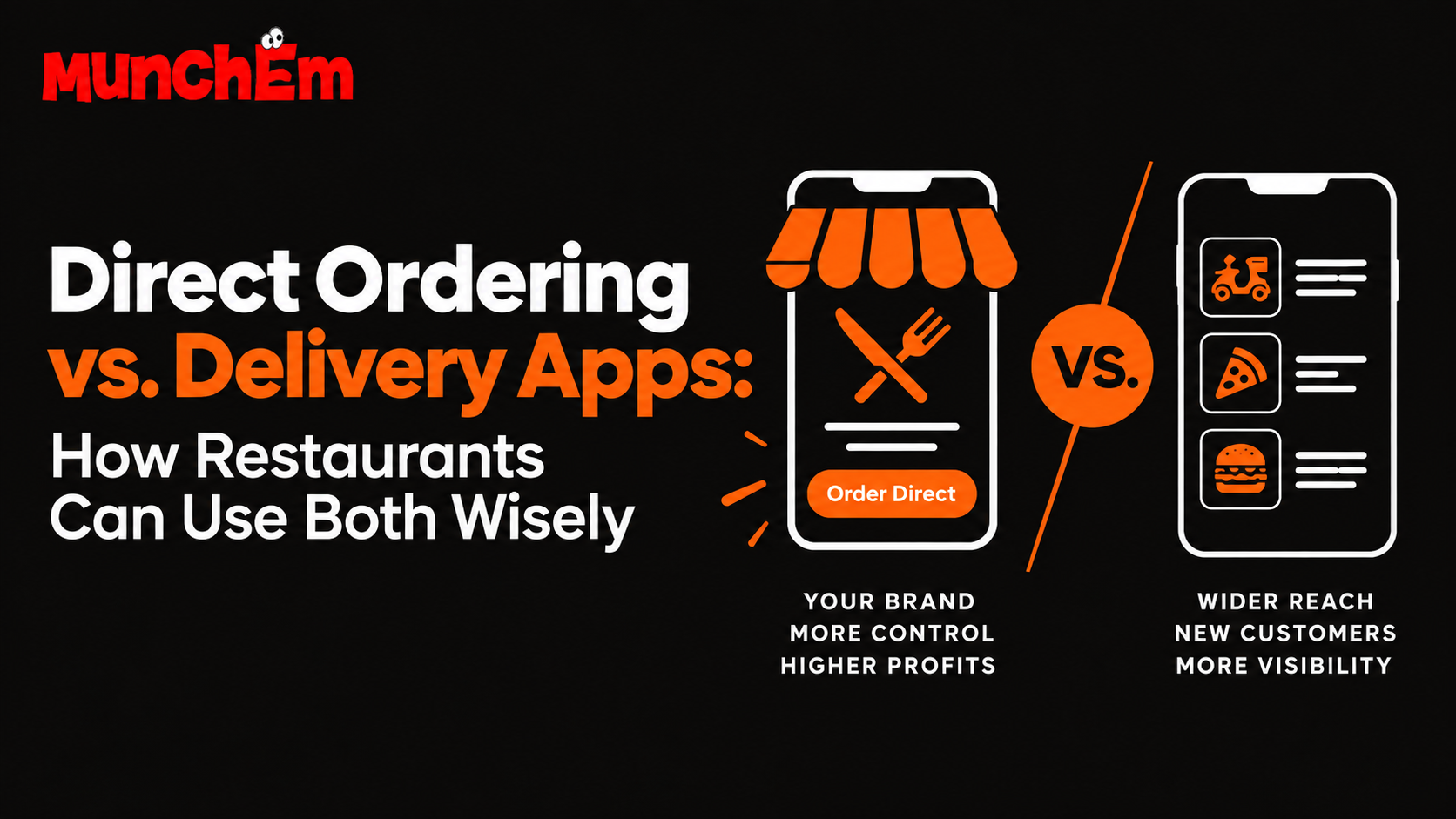
Online ordering gives restaurants more ways to reach customers than ever before. Third-party delivery apps can help restaurants get discovered, while direct ordering can give them more control over the customer experience and the economics of each order.
The best approach is often not choosing one over the other. Restaurants can use both strategically, depending on what they are trying to achieve.
Delivery Apps Can Help Restaurants Reach New Customers
Third-party delivery apps are useful because they already have a large audience.
Customers open these apps when they are actively looking for food. They can search by cuisine, distance, ratings, price, and availability.
For a restaurant that is still building awareness, this can be valuable. A customer who has never heard of the restaurant may discover it while browsing for dinner.
Delivery platforms also provide technology that restaurants may not want to build themselves, including online ordering, payments, customer notifications, and delivery coordination.
That makes them a convenient way to expand reach.
The Trade-Off Is Cost and Control
The convenience of third-party platforms comes with a cost.
Restaurants may pay commissions, marketplace fees, promotional fees, delivery-related charges, or other costs depending on the platform and agreement.
Those fees can reduce the profit on each order.
For example, a restaurant might receive two orders with the same total value, but the amount it keeps can be very different depending on whether the order came directly or through a third-party marketplace.
There is also less control over the customer relationship.
The customer is using the delivery platform's app, checkout process, loyalty system, and communication tools. The restaurant becomes one option among many inside someone else's marketplace.
That is why restaurants should understand the value of the platform without becoming completely dependent on it.
Direct Ordering Gives Restaurants More Ownership
Direct ordering allows customers to order through a restaurant's own website, mobile ordering page, QR code, kiosk, or other branded channel.
The restaurant controls the experience.
It can decide how the menu is displayed, which items are promoted, how customers move through checkout, and what offers are shown.
Direct ordering can also make it easier to build a stronger relationship with repeat customers.
Instead of sending customers back to a marketplace every time they want to order, the restaurant gives them a direct way to return.
Over time, that direct relationship can become one of the restaurant's most valuable digital assets.
Use Delivery Apps for Discovery
One practical strategy is to view delivery apps as customer acquisition channels.
A customer may discover a restaurant for the first time through a marketplace because they were browsing restaurants nearby.
That first order gives the restaurant an opportunity to make a strong impression through food quality, packaging, service, and consistency.
If that customer enjoys the experience, the restaurant can encourage them to visit its website, join its loyalty program, or use its direct ordering channel in the future where permitted by the platform's terms.
The delivery app helped create awareness.
The restaurant can then work on building a longer-term relationship.
Make Direct Ordering Easy
Customers will not switch to direct ordering simply because it is better for the restaurant.
It also needs to be convenient for the customer.
The ordering experience should work well on mobile devices, load quickly, and make it easy to find items.
Menus should be clear. Customization options should be simple. Checkout should not require unnecessary steps.
Customers should also receive clear confirmation after placing an order.
If direct ordering feels slower or more complicated than using a delivery app, many customers will continue using the marketplace.
Convenience matters.
Give Customers a Reason to Order Direct
Restaurants can encourage direct ordering by creating benefits customers can actually see.
That may include loyalty rewards, direct-order promotions, special menu items, easier reordering, or other incentives.
The goal is not necessarily to offer large discounts.
Sometimes convenience is enough.
If a regular customer can easily open the restaurant's website, reorder a favorite meal, and complete checkout quickly, direct ordering can become the natural choice.
Restaurants should focus on making the experience better, not simply telling customers to switch.
Measure Each Ordering Channel Separately
Restaurants should compare ordering channels based on more than total sales.
Important metrics can include:
- Average order value
- Fees and commissions
- Payment processing costs
- Promotional expenses
- Repeat order rate
- Customer acquisition cost
- Approximate profit per order
A third-party platform may generate more orders but at a lower margin.
Direct ordering may start with lower volume but produce stronger customer retention and better economics.
Looking at each channel separately helps restaurant owners understand where their most valuable orders are coming from.
Connect Online and In-Store Ordering
Direct ordering does not have to mean only website orders.
Restaurants can also use QR codes, self-service kiosks, digital menus, and POS-connected ordering systems.
The more these systems work together, the easier operations can become.
For example, a restaurant may have customers ordering through its website, placing orders at a kiosk, and purchasing at the counter.
If those transactions can be managed through a more unified system, staff can spend less time switching between disconnected platforms.
This can make direct ordering useful both for customers and restaurant operations.
Avoid Depending on One Channel
Third-party delivery apps can be valuable partners, but restaurants should avoid putting their entire digital business in one place.
Platform fees can change. Algorithms can change. Promotions can change. Customer behavior can change.
Owning a direct ordering channel gives the restaurant another way to reach its customers.
That does not mean abandoning delivery apps.
It means building a healthier mix of channels.
Use third-party marketplaces when they provide reach and convenience. Use direct ordering when it helps strengthen customer relationships, improve control, and create better long-term economics.
Use Both With a Clear Purpose
Delivery apps are good at helping restaurants get discovered.
Direct ordering is good at helping restaurants build relationships with customers they already know.
Restaurants can use both.
The key is understanding the purpose of each channel and measuring whether it is actually helping the business.
A balanced strategy can give restaurants the reach of large marketplaces without giving up the benefits of having their own ordering experience.
Want to build a stronger direct ordering channel while keeping your existing sales channels? See how MunchEm can help simplify online ordering, kiosks, and restaurant operations.